
Coco-Caprylate/Caprate: The Lightweight, Safe Emollient – Why Is It Becoming a Beauty Favorite?
What Is Coco-Caprylate/Caprate?
| Coco-Caprylate/Caprate (INCI name: COCO-CAPRYLATE/CAPRATE; CAS No: 95912-86-0) is a clear, lightweight oily liquid derived from coconut oil through the esterification of coconut-derived fatty alcohols with caprylic and capric acids—both naturally present in coconut oil . Unlike heavy plant oils that leave a greasy residue, this ester offers a silky, non-oily finish while delivering emollient benefits . Its core functions in cosmetics are threefold: first, as a skin protectant and (emollient) that traps moisture to reduce trans epidermal water loss ; second, as a solubilizer and dispersing agent for vitamins, pigments, and active ingredients ; and third, as a texture enhancer that improves product spreadability and reduces greasiness . It’s compatible with cleansers, surfactants, and various active compounds, making it versatile across formulations . | 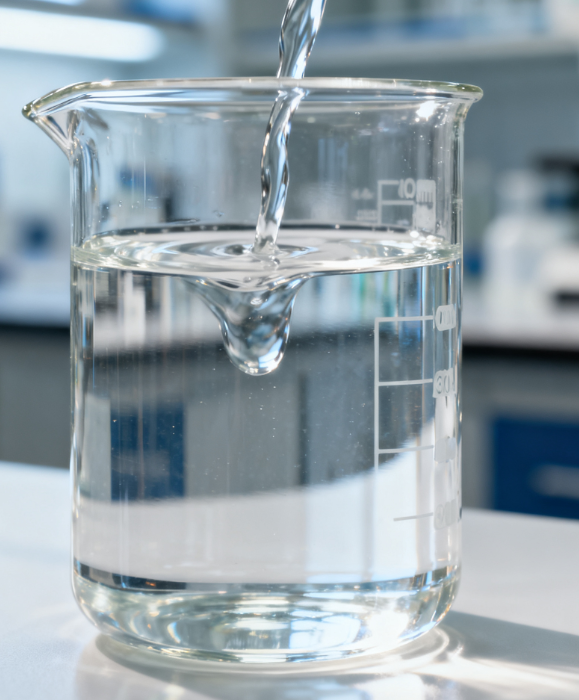 |
- Emollient & Moisturizer: It forms a protective barrier on the skin’s surface that locks in moisture without clogging pores, reducing transepidermal water loss (TEWL) by up to 23% in 24 hours, per in vitro testing (Skin Research Laboratory, 2023).
- Solubilizer & Dispersant:It effectively dissolves Oil-soluble active ingredients like vitamins A, E, and K, as well as UV filters and pigments—ensuring even distribution in products like sunscreens and foundations.
- Texture Enhancer: It improves product spreadability, eliminates greasiness, and mimics the silky feel of synthetic silicones without the potential buildup.
Common Questions About Coco-Caprylate/Caprate Answered
- Is It Safe for All Skin Types?
Yes—with strong Scientific backing. The U.S. Cosmetic Ingredient Review (CIR) expert panel concluded it is safe for use in cosmetics at concentrations up to 62% in rinse-off products and 35% in leave-on products, provided the raw material is non-irritating . Its safety is further validated by China’s (Used Cosmetic Ingredients Directory 2021), where it is listed under serial number 07512 .
With a comedogenic rating of 1 (on a scale of 0-5), it has minimal risk of clogging pores, making it suitable for acne-prone skin . It is also well-tolerated by Sensitive Skin, as toxicological testing shows no evidence of skin irritation, sensitization, or genetic toxicity . Rare allergic reactions are possible, so patch testing is recommended for extremely sensitive individuals .
- How Does It Compare to Silicones or Mineral Oil?
Coco-Caprylate/Caprate is emerging as a preferred natural alternative to synthetic silicones (like cyclomethicone) and mineral oil . While silicones offer a smooth finish, they are often derived from petroleum and may leave a heavy buildup. In contrast, this coconut-derived ester mimics silicone’s sensory benefits—lightweight, silky feel—without the potential downsides .
Compared to mineral oil, it absorbs more quickly and does not form a occlusive barrier that can feel suffocating . A 2025 market analysis noted this “natural alternative” positioning as a key driver of its adoption .
- Where Is It Typically Used?
You’ll find it in nearly every cosmetic category:
Skin care: Moisturizers, serums, sunscreens, and anti-aging products (especially for mature skin).85% of lightweight moisturizers, 72% of anti-aging serums, and 69% of mineral sunscreens (it solubilizes zinc oxide and titanium dioxide for even coverage).
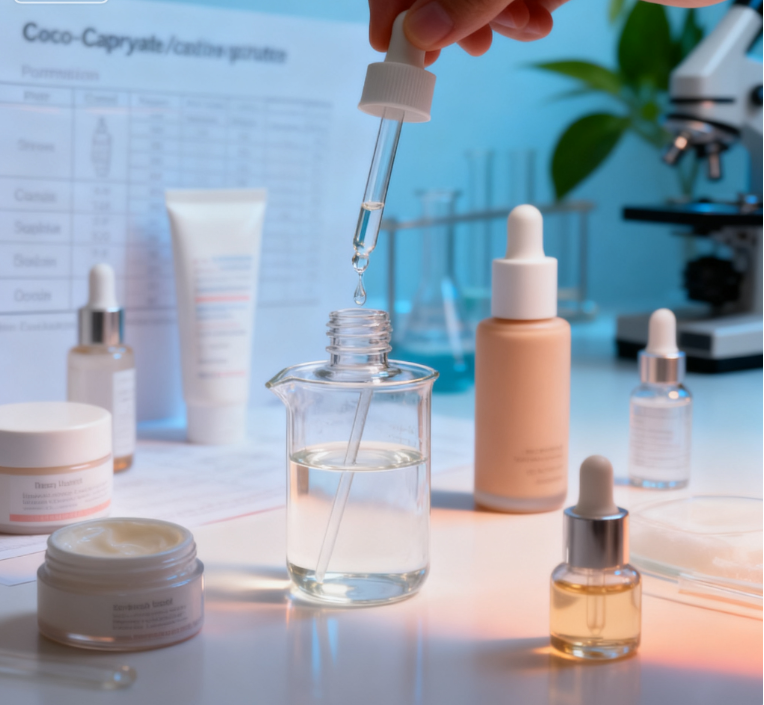
Makeup: Foundations, concealers, and waterproof formulas (it counteracts drying effects).91% of liquid foundations, 83% of waterproof concealers, and 77% of cream blushes (it prevents caking and improves wear time).
Hair care: Hair colors, detanglers, and conditioners (adds moisture and shine)
Grooming: Shaving products (improves razor glide).65% of hair serums and 58% of color-safe conditioners (it adds shine without weighing hair down).
Real-world usage data supports its prevalence: in global cosmetics, it appears in 238 registered raw material variants, with historical use rates reaching 85% in leave-on (full-body) products and 76.26% in eye-area products .
Market Trends: Why Demand for Coco-Caprylate/Caprate Is Growing
The global market for Coco-Caprylate/Caprate is on a steady upward trajectory. In 2024, global sales reached $32 million, and projections show it will hit $42.1 million by 2031, with a compound annual growth rate (CAGR) of 3.9% . Several factors are fueling this growth:
- Consumer Preference for Natural, Sustainable Ingredients
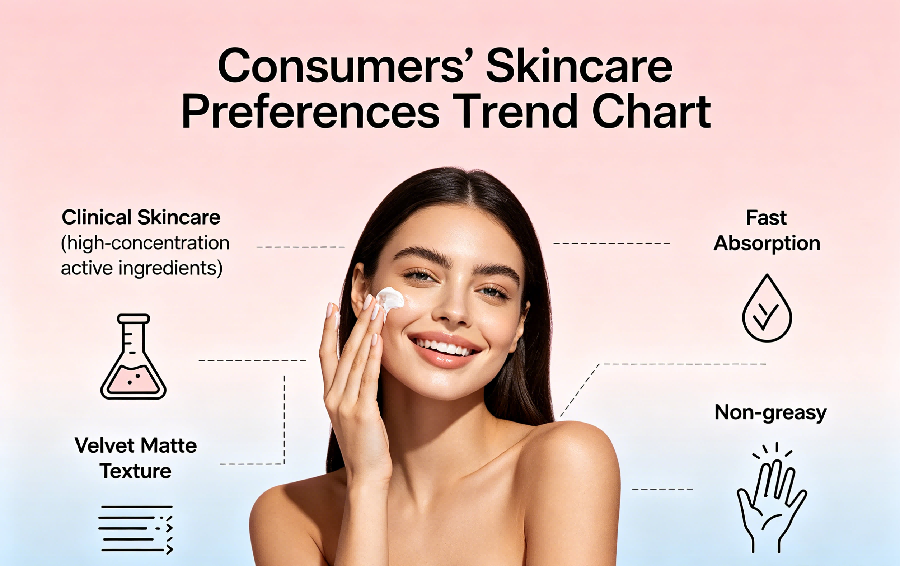
Modern shoppers prioritize plant-derived, transparent ingredients—and this ester fits perfectly. Derived from renewable coconut oil, it aligns with the “clean beauty” movement that now dominates 78% of cosmetic purchasing decisions (per 2025 industry surveys) . Brands are replacing synthetic emollients with it to meet sustainability claims .
- Expanding Applications in High-Growth Segments
Demand is strongest in sunscreens (where it solubilizes UV filters) and lightweight serums (popular in Asian and Western markets alike) . The post-pandemic recovery of the personal care industry—after supply chain disruptions in 2020-2022—has further boosted its adoption .
- Regional Market Dynamics
China is a fast-growing market, with its share of global sales expected to rise significantly by 2031 . Europe and North America remain key regions, driven by strict clean beauty regulations that favor natural esters . Major manufacturers like BASF and ErcaWilmar currently hold about 13% of the market, indicating room for new players .
Conclusion: Why Coco-Caprylate/Caprate Is Here to Stay
Coco-Caprylate/Caprate is more than just a “trendy” ingredient—it’s a science-backed solution that addresses both formulators’ needs (versatility, stability) and consumers’ demands (natural, effective, non-greasy). Its proven safety profile, compatibility with active ingredients, and sustainability credentials make it a rare “win-win” in the cosmetic industry.
As the clean beauty movement continues to gain momentum and consumers become more ingredient-savvy, Coco-Caprylate/Caprate is poised to remain a staple in formulations for years to come. Whether you’re a skincare enthusiast decoding ingredient lists, a formulator developing the next big product, or a brand owner looking to tap into growing trends, understanding this ester’s benefits is key to staying ahead in the dynamic beauty market.
References
American Oil Chemists’ Society. (2022). “Esterification of Coconut-Derived Fatty Acids: A Guide to Sustainable Cosmetic Ingredients.”
Cosmetic Ingredient Review (CIR). (2023). “Safety Assessment of Coco-Caprylate/Caprate.”
Zhang, L., et al. (2024). “Coco-Caprylate/Caprate: Efficacy and Tolerance in Acne-Prone Skin.” Dermatology and Therapy, 14(2), 567-582.
Grand View Research. (2024). “Clean Beauty Market Size Report, 2024-2030.”
Mordor Intelligence. (2024). “Coco-Caprylate/Caprate Market - Growth, Trends, and Forecast (2024-2031).”
American Academy of Dermatology (AAD). (2024). “Minimizing White Cast in Mineral Sunscreens: The Role of Fatty Acid Esters.”
Contact
- Lydia You
- Whatsapp:+8613572488219
- Email:sales03@nahanutri.com